
Key Takeaways
- Sublimation dyes the polyester itself, so a sublimated jersey has zero print feel, stays fully breathable and keeps its colours for the life of the garment.
- DTF transfers sit on top of the fabric as a thin film, which works on cotton, blends and dark colours but adds a slight layer over sweat-prone areas.
- Full-print team kits (cricket, football, kabaddi, cycling, marathon tees) are a sublimation job; chest logos, sponsor patches and names on stock jerseys suit DTF.
- Sublimation needs white or very light polyester (ideally 100%, at least about 65%); DTF works on almost any fabric colour.
- Many Indian teams combine both: a sublimated base jersey with DTF names, numbers or late sponsor logos.
What Is the Difference Between Sublimation and DTF for Jerseys?
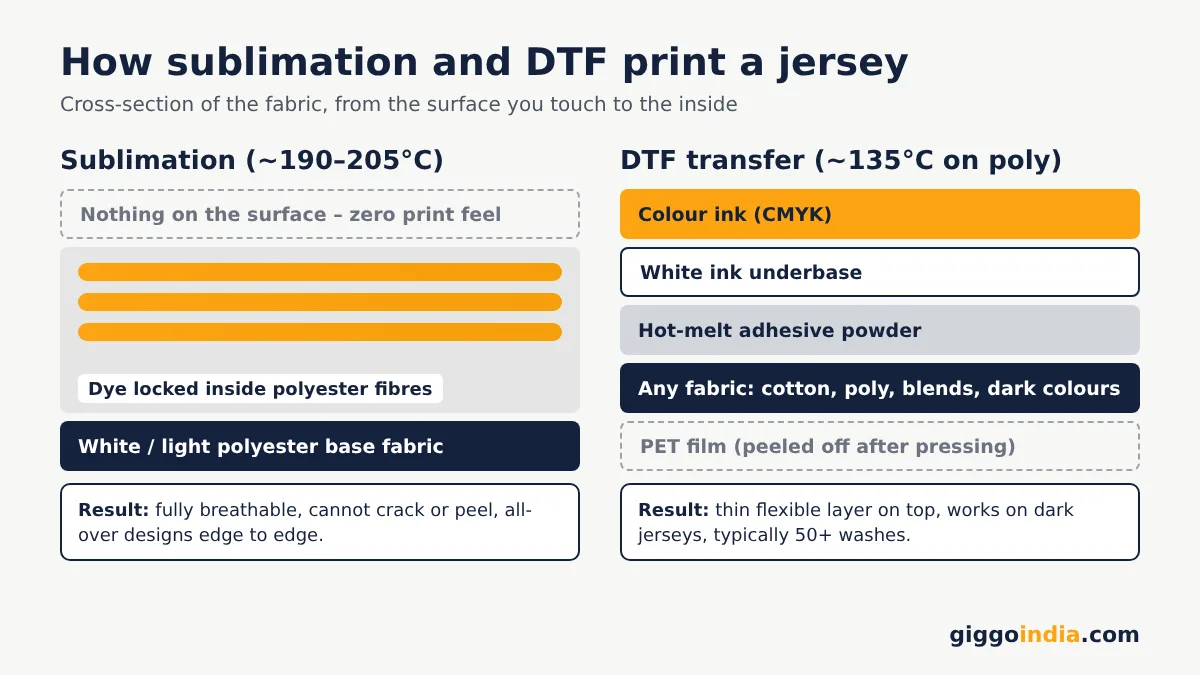
Sublimation turns special ink into gas under heat so it bonds inside polyester fibres, while DTF (direct-to-film) prints the design on a film with a white underbase and glue, which is then heat-pressed onto the surface of the jersey. That one difference, inside the fabric versus on top of it, decides almost everything else.
With sublimation printing, the design is printed in mirror image on sublimation paper and pressed onto white polyester at roughly 190–205°C. The fabric's pores open, the ink becomes a gas and locks into the fibres as it cools. Nothing sits on the surface, so the jersey feels exactly like unprinted fabric.
With DTF, the printer lays down CMYK colour, then a white ink layer, then hot-melt adhesive powder on a PET film. The cured transfer is pressed on, and the film is peeled away. The print is a flexible layer bonded to the fabric. Modern DTF is thin and stretchy, but you can still feel it with your fingers.
If you want the deeper science of how dye bonds with polyester, our earlier guide on sublimation printing on polyester and the best fabrics covers it step by step.
Sublimation vs DTF for Sportswear: Side-by-Side Comparison
For performance sportswear, sublimation wins on comfort, breathability and all-over design freedom, while DTF wins on fabric flexibility and small-batch personalisation. The table below compares the two methods on the points that matter for team kits.
| Factor | Sublimation | DTF transfer |
|---|---|---|
| Where the ink sits | Inside the polyester fibres | On top of the fabric as a film |
| Fabric needed | White/light polyester (100% ideal, ~65%+ minimum) | Cotton, polyester, blends, nylon (with care) |
| Dark jersey fabric | Not possible on pre-dyed dark fabric | Yes, white underbase makes colours pop |
| All-over / edge-to-edge print | Yes, including sleeves, collar and side panels | Not practical; best for placed graphics |
| Feel on skin | No feel at all | Thin, soft layer you can feel |
| Breathability | Fabric breathes fully | Large DTF areas reduce airflow |
| Wash life | Lasts the life of the garment; cannot crack or peel | Typically 50+ washes when pressed and cared for correctly |
| Colour range | Unlimited colours and gradients, no extra cost | Unlimited colours, priced by print area |
| Names and numbers | Built into the design file (each piece unique) | Pressed individually on any jersey |
| Best for | Full team kits, cycling and running jerseys, esports jerseys | Cotton tees, dark stock jerseys, logos, late additions |
The short version: if the jersey is polyester and you control the full design, choose sublimation printing. If the jersey already exists (stock colour, cotton, or a branded blank), choose DTF.
Is Sublimation or DTF Better for Cricket and Football Jerseys?
Sublimation is better for cricket and football jerseys in almost every team order, because these sports involve hours of sweating in Indian heat and the kit needs to breathe and survive frequent washing. A sublimated print adds no weight and no surface layer, so dri-fit and honeycomb mesh fabrics keep wicking sweat the way they were designed to.
Cricket whites with coloured sleeves, IPL-style full-colour kits, football jerseys with stripes or gradients and kabaddi vests with bold side panels are all designed as one complete artwork. Sublimation prints that artwork edge to edge, including under the arms and across seams on cut-and-sew jerseys.
DTF still has a role here. If a corporate cricket league buys stock dri-fit jerseys in navy or black, sublimation will not show on those dark fabrics. DTF can add the team logo on the chest, sponsor names on the sleeve and player names on the back.
When Is DTF the Better Choice for Jerseys?
DTF is the better choice when the jersey is cotton or a cotton blend, when the fabric is already dyed a dark colour, or when you only need small placements such as a logo, a number or a sponsor badge. It is also handy for one-off replacements when a single player joins mid-season.
Typical situations where Indian teams and clubs pick DTF:
- Cotton fan jerseys and supporter tees for college fests, society cricket tournaments or office events.
- Black, navy or maroon stock jerseys where the club wants to keep the base colour.
- Name and number personalisation on bought kits, pressed one by one from a single gang sheet.
- Last-minute sponsor logos added a few days before a tournament.
You can order these as ready-to-press transfers through our DTF print sheets service and press them yourself or through a local tailor or print shop.
What is dye migration, and why does it matter for DTF on polyester?
Dye migration is when the colour of a dyed polyester jersey bleeds into a heat-pressed print, for example turning white DTF numbers pinkish on a red jersey. It happens because polyester dyes can move under high heat.
To reduce it, DTF on polyester is pressed at a lower temperature than on cotton. Roland DGA's guide on applying DTF transfers to polyester garments suggests about 135°C for polyester compared with about 166°C for cotton, and recommends a test press first. Low-melt adhesive powders and dye-blocking white inks also help. Sublimation avoids this problem entirely because it is printed on white fabric.
How Much Do Sublimation and DTF Jerseys Cost in India?
In India, a fully sublimated polyester jersey typically costs about ₹190 to ₹650 per piece, depending on fabric, sleeve length, collar style and quantity, while DTF pricing depends on the print size and is usually charged per sheet, per metre or per placement. Online listings show basic sublimated sports tees from around ₹190–₹270 and full-sleeve cricket kits nearer ₹540–₹650.
What moves the price for sublimation jerseys:
- Fabric: honeycomb mesh, micro-polyester and interlock differ in GSM and cost.
- Construction: half sleeve vs full sleeve, round neck vs polo or mandarin collar.
- Quantity: sublimation has no screens or plates, so even 10–15 jerseys are viable, but rates drop with larger squads.
- Extras: shorts, socks, caps and trousers usually come as separate line items.
For DTF, the main cost driver is how much film area your designs use. A gang sheet with 15 names, 15 numbers and a team crest is far cheaper per player than a full-front graphic.
On tax, readymade garments priced up to ₹2,500 per piece attract 5% GST and those above ₹2,500 attract 18% under the current slabs. Confirm the right rate and HSN code for your invoice with your CA. For exact rates on your design and quantity, share the details with us on WhatsApp.
How Do You Choose Between Sublimation and DTF for Your Team Order?
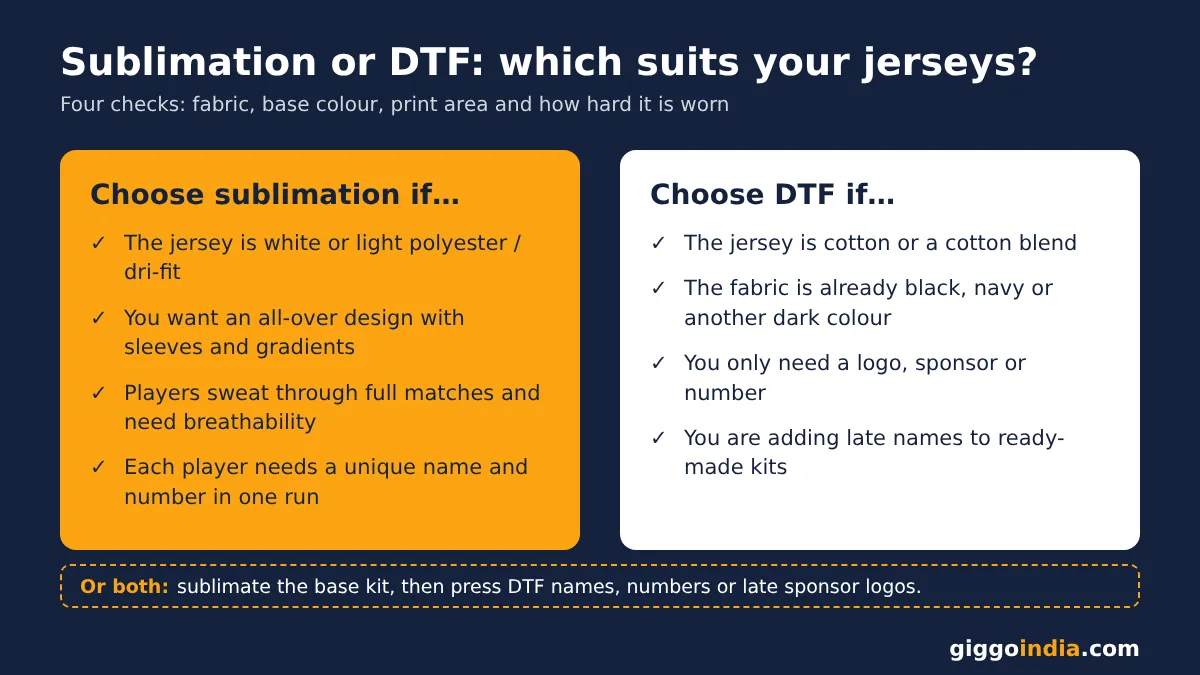
Start with the fabric and the base colour, then look at how much of the jersey is printed and how many unique names you need. These four questions settle the decision for most orders.
- What is the fabric? Polyester or poly-dri-fit points to sublimation. Cotton or cotton-rich blends point to DTF.
- What colour is the base fabric? White or light grey polyester can take sublimation in any final colour. A dark pre-dyed jersey needs DTF.
- How much of the jersey is printed? All-over designs, gradients and sleeve-to-sleeve patterns need sublimation. A chest logo and back number can be either.
- Who is wearing it and how? Players sweating through a full T20 or a 90-minute match benefit from sublimation's breathability. Fans at a stadium or an office team day can wear DTF-printed cotton comfortably.
Can You Combine Sublimation and DTF on the Same Jersey?
Yes, many teams sublimate the base jersey and add DTF names, numbers or sponsor logos afterwards, which gives full design freedom plus flexible personalisation. This hybrid route is common when the squad list is still changing close to the tournament.
The base kit is produced in one sublimation run with the team colours, crest and fixed sponsors. Player names and numbers are then pressed with DTF at a low polyester temperature as the final list comes in. If a sponsor is added late, a DTF transfer can be pressed on without reprinting the whole kit.
What Turnaround and Planning Should Indian Teams Expect?
Plan at least two to three weeks for a custom sublimated team kit, including design approval, sizing and delivery, while DTF transfers for names and numbers can usually be turned around much faster. Collecting sizes and confirming spellings is often the slowest step.
A few practical tips for Indian teams and organisers:
- Lock the name-and-number list in writing and double-check spellings before printing.
- Order one or two spare jerseys in the most common sizes for late joiners.
- Avoid peak rush periods such as the weeks before inter-company leagues, school sports days and winter tournament season, when printers across India get busy.
- Factor in shipping time if your team is in a different city; most orders travel by courier across India.
For sublimated kits, mugs or other polyester products, see our sublimation printing service for what we can produce.
Frequently Asked Questions
Is sublimation or DTF better for jerseys?
Sublimation is better for most polyester jerseys because the dye becomes part of the fabric, so it stays breathable, cannot crack or peel and allows full all-over designs. DTF is better when the jersey is cotton, already dyed a dark colour, or only needs a small logo, a name or a number. Many teams use sublimation for the kit and DTF for personalisation.
Can you sublimate on a black or dark polyester jersey?
No, sublimation ink is transparent, so it does not show on black, navy or other dark pre-dyed fabric. To get a dark sublimated jersey, the full design, including the dark background, is printed onto white polyester. If you already have dark jerseys, use DTF transfers instead, since DTF prints a white underbase that keeps colours bright on dark fabric.
Does DTF printing work on dri-fit polyester jerseys?
Yes, DTF works on dri-fit polyester if it is pressed at a lower temperature, around 135°C as suggested by printer manufacturers, to avoid scorching and dye migration. Keep DTF areas small, such as logos and numbers, so the fabric still breathes. Always do a test press on one jersey from the same batch before pressing the full order.
How long does a sublimated jersey print last?
A sublimated jersey print lasts as long as the fabric itself because the ink is bonded inside the polyester fibres rather than sitting on top. It cannot crack, peel or wash off. Colours may soften slightly over years of strong sunlight and harsh washing, but the design stays intact. Washing inside out in cold water helps keep colours bright.
How many washes does a DTF print on a jersey last?
A well-pressed DTF print typically lasts 50 or more washes without cracking or fading. Life depends on correct temperature, pressure and time, the quality of the film and powder, and care. Wash the jersey inside out in cold or lukewarm water, avoid bleach, and skip the tumble dryer or high-heat ironing directly on the print.
What fabric is best for sublimation jerseys?
The best fabric for sublimation jerseys is white or light polyester, ideally 100% polyester, such as honeycomb mesh, micro-polyester or interlock dri-fit. Blends with at least about 65% polyester can work but look less vivid. Cotton cannot hold sublimation dye, so cotton jerseys should be printed with DTF or DTG instead.
Is there a minimum order for custom sublimation jerseys?
Sublimation does not need screens or plates, so small team orders are practical and some suppliers print even a single jersey. Per-piece rates usually drop as quantity increases, especially beyond 20–50 pieces. Because every jersey can carry a unique name and number in the same run, sublimation suits squads of any size.
Can I add names and numbers to an already printed jersey?
Yes, names and numbers can be added to an already printed jersey using DTF transfers or heat transfer vinyl. DTF is popular because many names and numbers fit on one gang sheet and each is pressed in seconds. On polyester, press at a lower temperature and test first to avoid dye migration from coloured fabric into white numbers.
So, Which Should Your Team Choose?
For polyester match jerseys with full designs, choose sublimation for comfort, breathability and a print that never cracks. Choose DTF for cotton, dark stock jerseys and quick names, numbers or logos, or combine the two for the most flexible team kit.