
Commercial Direct to Garment (DTG) Digital Printing
Engineered for premium streetwear labels, fashion designers, and graphic artists demanding photorealistic nuance. Water-based pigment inks are jetted directly into natural combed cotton fibers, yielding an ultra-soft skin touch, intricate tonal gradients, and complete fabric breathability with zero rubbery film edges.
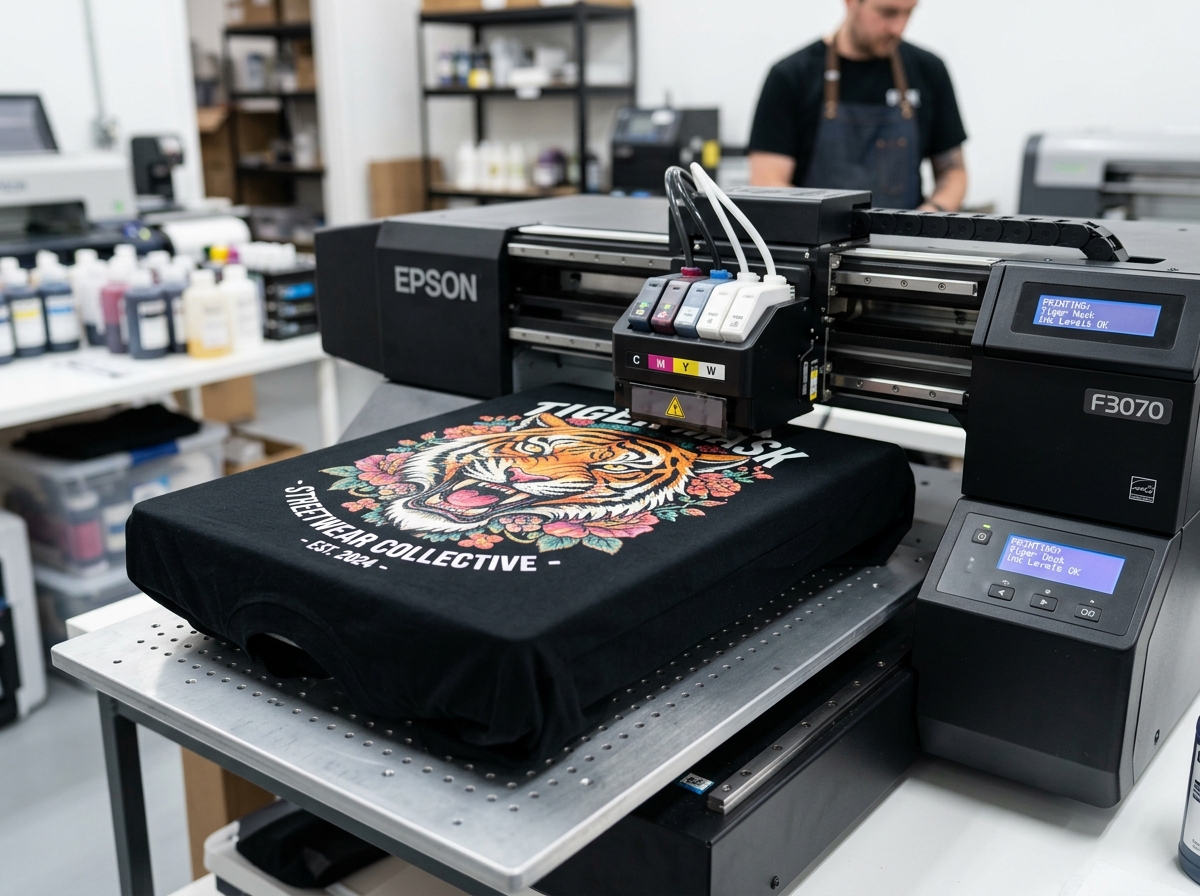
Direct to Garment (DTG) printing is an advanced textile inkjet decoration method that jets water-based pigment inks directly into 100% natural cotton fibers using micro-piezo printheads. Because the pigment absorbs directly into the cotton matrix rather than forming a plastic or polyurethane film on top, DTG delivers an ultra-soft or true zero-feel hand, photorealistic continuous color gradients, and maximum fabric breathability for premium streetwear and boutique apparel drops.
What is DTG Printing & How Does It Work?
A high-precision digital process where specialized textile printheads jet pigmented inks directly into cotton fibers.
Automated Pre-Treatment
Dark and colored garments receive an automated, uniform coating of pre-treatment liquid. This primer reacts instantly with white ink, holding pigment particles on top of the cotton weave rather than letting them bleed away.
Thermal Fiber Flattening
The pre-treated garment is heat-pressed under controlled pressure to flatten loose surface fibrils, creating a mirror-flat textile surface essential for microscopic inkjet registration.
Dual-Pass Digital Jetting
Industrial printheads lay down an opaque titanium dioxide white ink underbase on dark fabrics, followed immediately by high-density CMYK inks to achieve photographic realism.
Tunnel Dryer Curing
The printed garment passes through a hot-air conveyor tunnel dryer, cross-linking the water-based acrylic binders deep into the cotton fibers for long-lasting wash durability.
The "Zero-Feel" Advantage for High-End Streetwear
Unlike heat transfer vinyl or heavy plastic plastisol inks, DTG printing deposits water-based inks directly into the garment's fiber matrix. On white and light-colored cotton shirts, there is virtually zero detectable ink deposit—the graphic feels just like unprinted cotton.
On black and dark shirts, the thin white underbase provides full color vibrancy while maintaining a significantly softer, more breathable hand feel than rubbery plastisol screen prints or heavy transfer films. It won't crack under normal fabric stretch or trap sweat during hot weather wear.
DTG vs DTF vs Screen Printing: Which Should You Choose?
An objective comparison across fabric compatibility, hand-feel, order volume, and visual fidelity.
| Feature / Metric | Direct to Garment (DTG) | DTF Transfers (PET Film) | Screen Printing |
|---|---|---|---|
| Fabric Compatibility | Strictly 100% cotton or high-cotton blends (min 80% cotton) | Universal: 100% cotton, polyester, nylon, canvas, fleece, spandex | Broad: Cotton, poly-blends, polyester (with blocker inks) |
| Hand-Feel & Breathability | Zero to ultra-soft feel; 100% breathable on light tees | Lightweight flexible film; soft with TPU powder but sealed | Heavier rubbery deposit (plastisol) or soft (waterbase) |
| Minimum Order Quantity (MOQ) | Zero MOQ; ideal for 1 to 50 pcs sample drops | Zero MOQ; order by the meter or gang sheet | High MOQ (typically 50-100+ pcs per design/colorway) |
| Photographic Gradients & Nuance | Industry benchmark; seamless skin tones, smoke & fades | Excellent high-resolution detail and solid color pop | Limited by halftone mesh count; requires simulated process |
| Prepress & Setup Cost | Zero screen or plate costs; instant digital rip | Zero screen costs; direct roll-to-roll printing | High setup cost per color (film positive, stencil screens) |
| Best Commercial Application | Luxury oversized streetwear, artist merch, boutique capsule drops | Apparel brands with their own heat press, hoodies, caps, sportswear | Massive commercial bulk runs (500+ identical 1-2 color t-shirts) |
Who Benefits Most From DTG Garment Printing?
Tailored for brands where garment feel, design complexity, and low-batch agility matter most.
Luxury & Oversized Streetwear Brands
Heavyweight 220 to 280 GSM french terry and drop-shoulder combed cotton tees. DTG keeps massive back-prints supple, drapable, and comfortable against the wearer's skin.
Visual Artists & Graphic Illustrators
Artists creating intricate digital paintings, watercolor illustrations, and pencil sketches with hundreds of continuous color shades that cannot be reproduced using screens.
Indie Music Bands & Tour Merch
Full-color album covers, tour photo collages, and distressed vintage graphics produced without requiring thousands of units in advance inventory investment.
Capsule Collections & Pre-Order Drops
Launch limited-edition capsule collections on social media and print strictly against customer pre-orders without the risk of dead unsold inventory.
Brand Prototyping & Sampling
Inspect exact physical garment samples, test sizing scales, and evaluate fabric drape before commissioning larger production runs.
Premium Corporate Executive Apparel
Refined company milestone merchandise and executive gifts printed on high-GSM organic cotton polos and tees with subtle, high-taste branding.
Fabric Compatibility & Wash Care Guidelines
Understanding fabric requirements is essential to maximizing the beauty and lifespan of DTG prints.
Recommended Cotton Quality
- 100% Combed Ring-Spun Cotton: The premier standard for DTG. Long-staple combed cotton has minimal surface fuzz, producing pin-sharp lines and maximum color vibrancy.
- Carded Open-End Cotton: Common on lower-cost promotional tees. Loose fiber hairs can poke through ink layers, yielding a slightly muted, vintage appearance.
- 80/20 Cotton/Polyester Blends: Acceptable for heavyweight hoodies, though color saturation will be approximately 10-15% softer than pure cotton.
- 100% Synthetic Polyester: Not compatible with DTG. For 100% polyester athletic garments, explore our Sublimation Printing or DTF Transfer Sheets.
Recommended Wash Care Protocol
- Turn Inside Out: Always turn the garment inside out prior to washing to protect the surface ink film from abrasive machine friction.
- Cold Water Wash: Machine wash cold (30°C or below) using a gentle cycle and mild liquid detergent.
- No Bleach or Fabric Softeners: Avoid chlorine bleach and harsh fabric softeners that can degrade water-based binders.
- Line Dry in Shade: Air dry flat or hang on a line away from direct baking sunlight. If machine drying, use tumble dry low.
- Iron Inside Out: Never place a hot iron directly onto the printed area; iron on reverse with low to medium heat.
Artwork & File Preparation for DTG Printing
Follow these artwork guidelines to ensure optimal color separation and razor-sharp digital output.
300 DPI at 1:1 Print Scale
Submit graphics sized to your exact intended print dimensions (e.g. 35cm x 45cm) at 300 DPI. Avoid low-resolution web previews that pixelate when printed large.
Clean Transparent Background
Artwork must have a clean transparent alpha channel (PNG, TIFF, PSD, or AI). Remove any unwanted black or white rectangular background boxes before submitting.
Soft Gradient Halftoning
Semi-transparent glows with opacity under 15% can look grainy on dark shirts due to white ink underbasing. We recommend halftoning subtle fades for smoother feathering.
Color Profile Configuration
Files can be submitted in Adobe RGB (1998), sRGB, or CMYK. Our DTG RIP software will map your color gamut accurately using custom calibrated ICC profiles.
How to Order DTG Garment Printing
Our streamlined workflow from initial file submission to final doorstep delivery.
Select Garments & Quantities
Decide whether you will supply your own pre-tested 100% combed cotton blanks or have Giggo India provide premium heavyweight t-shirt blanks.
Artwork & Size Mockup
Send your 300 DPI transparent PNG artwork along with a digital garment mockup showing intended print placements (front chest, back oversized, etc.).
Quotation & Sample Approval
Receive a transparent quotation based on garment color, print dimensions, and quantity. Physical strike-off samples can be produced for brand approval.
Pre-Treatment & Print Run
Garments are automated-pretreated, heat-pressed, direct-printed with eco-pigment inks, and thermally cured through our tunnel drying oven.
Quality Inspection & Delivery
Every piece undergoes visual inspection for color accuracy, registration, and cure. Garments are folded, polybagged, and dispatched across India.
Common Questions About Direct to Garment (DTG) Printing
Clear technical answers to help you choose the right digital apparel printing method.
DTG jets water-based pigment inks directly into the cotton fibers rather than transferring a solid adhesive film layer onto the fabric surface. On white cotton tees, the ink feels completely weightless with zero hand feel. On dark shirts, it creates a much softer, more breathable print than the continuous TPU film layer of DTF transfers.
100% combed ring-spun cotton provides the ultimate print surface. Combing removes short, rough fibers, creating an exceptionally smooth, tightly woven face that allows inkjet droplets to bond cleanly without fiber fuzz breaking through the print.
Yes. We apply an automated pre-treatment solution and print an opaque white ink underbase first. The colored CMYK inks are then jetted directly over the white underbase, yielding bright, vibrant graphics on black, charcoal, and dark-colored cotton garments.
Because DTG is a 100% digital process requiring no film screens, emulsion stencils, or physical plates, we can produce single-piece samples as well as small-batch capsule drops without demanding high setup minimums.
Pre-treatment is a specialized chemical primer that coagulates titanium dioxide white ink, preventing it from soaking into the cotton weave. You may notice a faint box-like mark or slight stiffness around the print on a brand-new shirt; this completely disappears after the very first standard wash.
When cured in a commercial tunnel dryer, DTG prints last 30 to 50+ wash cycles. To maximize print life, wash inside-out in cold water (30°C or below), avoid chlorine bleach and fabric softeners, and line dry in the shade.
Screen printing requires individual mesh screens for every color, making 10-color photorealistic prints cost-prohibitive on runs under 100 pieces. DTG handles unlimited colors, gradients, and photographic elements effortlessly with zero setup fees, making it superior for limited runs, multi-color art, and on-demand drops.
Provide transparent background PNG, PSD, or AI files at 300 DPI at the exact intended print dimensions (1:1 scale). For dark garments, ensure semi-transparent glows are halftoned or kept above 15% opacity for clean white ink underbasing.
Carded or open-end cotton contains loose micro-fibers that stick upright like tiny hairs, causing white ink to look fuzzy or faded. Enzyme-washed, 100% combed ring-spun cotton (180 to 240+ GSM) removes these loose fibrils, providing a glass-smooth textile face that allows printheads to lay down razor-sharp, photorealistic gradients with rich black depth.
Yes. With zero screen creation costs and fully digital queue processing, DTG is ideal for fashion lookbook sampling, creator merchandise drops, and pre-order apparel campaigns where printing on-demand avoids the financial liability of unsold finished inventory.